GANGLAND UK

Vallucos gang members get life in prison for 'ice pick' murder


Cameron Park man accused of stabbing and killing a woman with an ice pick will spend the rest of his life in jail. After two and a half hours of deliberation, a Cameron County jury sentenced Ernesto Berlanga to life in prison for the August 2005 murder of Patricia Salas. The two had been fighting when he stabbed her in the neck and then fled the scene. Prosecutors previously identified Berlanga as a member of the Vallucos prison gang. Berlaga was already serving a 25-year sentence for gouging the eye of a fellow inmate at the Carrizales-Rucker Detention Center back in 2006.

police have released images of 28 suspects they want to question about serious street disorder that “wreaked havoc” across Northern Ireland

The police have released images of 28 suspects they want to question about serious street disorder that “wreaked havoc” across Northern Ireland.

Detectives from a specialist public order inquiry team are hoping the public will help them identify the men in these images as part of their investigations into rioting in east Belfast and Ballyclare during June and July.

Three people were shot during three nights of sustained sectarian violence at an interface on the Lower Newtownards Road in Belfast in June.

In Ballyclare six officers sustained whiplash when a hijacked bus rammed a police vehicle during riots that erupted after Union and paramilitary flags were removed from lampposts in July.

Assistant Chief Constable Alistair Finlay said the response from the public appeals to date had been “positive”.

A second tranche of photographs will be released on Thursday showing suspects police want to speak to in connection with rioting in north and west Belfast during July.

Last month all of Northern Ireland’s main news organisations wrote to the PSNI Chief Constable to protest at having to hand over riot footage of trouble in east Belfast.

The letter highlighted to Matt Baggott the “genuine fear that terrorists and rioters will target the media whom they perceive to be evidence gatherers for the State” if the PSNI continues to demand the disclosure of material gathered for news purposes.

The PSNI has declined to comment on the source of these latest images.


Teenager remanded over Malaysian student riot mugging


17-year-old has appeared in court charged with breaking the jaw of a Malaysian student and robbing him of his bicycle during the London riots. The teenager appeared at Thames Magistrates Court accused of causing grievous bodily harm of Ashraf Rossli in Barking, east London on 8 August. He was also accused of robbing the 20-year-old of a white bicycle. No plea was entered for the charges but Hannah Stephenson, defending, said he denied all the alleged offences. The teenager was also charged with violent disorder at a Tesco store in Barking and theft from the store on the same day. The 17-year-old appeared alongside his 15-year-old brother at a hearing. The brothers denied charges of violent disorder in Ilford and theft from a jewellers shop in Ilford, east London, on 8 August. The older brother was remanded in custody, with the younger brother given conditional bail. The conditions include observing a curfew with a tag. The brothers are due to reappear at Thames Magistrates Court on 12 September. They cannot be named for legal reasons.

Drug couriers killed in Chiang Rai


Two drug traffickers were killed and 22,200 methamphetamine pills seized late on Sunday night in a clash with a combined force of police and para-military rangers of the Pha Muang Force in Thoeng district of Chiang Rai province, police said. Pol Maj-Gen Songtham Alapach, the Chiang Rai police chief, said the combined police-ranger force laid in wait near Rom Pho Thong village in tambon Tap Tao of Thoeng district between kilometre markers 56-57 on the road to Phu Chi Fa mountain near the Thai-Lao border after learning that a drug gang would transport speed pills across the border from Laos. Late in the night, the combined force spotted five men carrying backpacks and AK47 rifles walking down from the mountain and ordered them to stop for a search. The smugglers opened fire and a 10 minute gunfight followed. After the clash, the police and rangers examined the area and found the bodies of two men who were killed in the fight.  One of them was identified as Laopho sae Wang, 50, a villager of Rom Pho Thong village, and the other was an unidentified Hmong from neighbouring Laos. The three other smugglers fled back across the border. A backpack containing 22,200 methamphetamine pills and a 9mm pistol were also found at the scene.

Gaylords charged with gun, drug and gang crimes


Police and federal agents swept through several suburban homes Tuesday, arresting members of the "Almighty Gaylords" street gang following an 18-month undercover investigation into allegations of drug dealing, gun trafficking and violent intimidation. Nine alleged members of the gang were charged with federal gun crimes, including selling an AK-47 assault rifle, and six others were charged with state drug and gang crimes, according to the U.S. attorney's office. Topics Juvenile Delinquency Crimes Gang Activity See more topics » Beginning in 2009, an informant inside the gang recorded conversations with gang members and bought guns and set up drug deals under the surveillance of investigators, led by the U.S. Bureau of Alcohol, Tobacco, Firearms and Explosives, authorities said. Once violent players in Chicago's decades-long neighborhood battles over integration, not much has been heard from the Gaylords since the 1970s. But the investigation, which involved ATF, Cook County sheriff's police and the Addison Police Department, lifts the curtain on the remnants of a gang that followed the white-flight path to the suburbs over the years. A secretive, somewhat ragtag network, the Gaylords in the western suburbs are often described as the "Gray Lords," a handful of middle-age men nostalgic over their youth spent brawling with Hispanics in the city's ethnic neighborhoods. "The Gaylords never were an especially organized gang, and gang life meant mainly drugs, alcohol, racism and fighting," said gang expert John Hagedorn, who teaches at the University of Illinois at Chicago. Having interviewed gang members over the years, he said they were "more of a model for racist, white youth than for an organized criminal entity." Investigators say the case shows a more serious threat. Other members were charged in a 2010 shooting, which the investigation revealed may have been related to internal gang strife. And the informant told investigators that gang members claimed the Gaylords carried out the 2009 murder of a North Side bar owner. Charged Tuesday were the alleged leader of the Addison faction of the gang, James Grace, 40, as well as Edward Rand, 46, and Daniel Springhorn, who allegedly supplied the gang with guns he purchased at Wisconsin gun shows. Springhorn, 56, known as "Stone Greaser," lives in Sharon, Wis., and Rand lives in far north-suburban Antioch. Other members arrested Tuesday live in Lombard, Villa Park and Elmhurst. The federal defendants are charged only with gun trafficking crimes, each of which carries a maximum penalty of 10 years in prison and a $250,000 fine. Three alleged members, including Grace's brother, Wayne Grace, were charged with felony drug crimes in DuPage County, according to the DuPage County state's attorney's office. Another three individuals were charged with associating with gang members, a misdemeanor. The case took shape when a longtime member who wanted out of the gang became a police informant. While many of the gang members, like James Grace, are unemployed ex-cons, some have strong ties to law enforcement. Alleged gang members identified by the investigation include a Cook County sheriff's deputy, an Elmwood Park auxiliary police officer, a Michigan corrections officer and the son of a former suburban police chief, according to law enforcement sources. None of the law enforcement officers associated with the gang have been charged in the case. Much of the gang's gun supply came from Wisconsin. At Springhorn's rural home, agents discovered a cache of guns that included assault rifles. Investigators found that Springhorn and Rand, who is prohibited from possessing firearms because he is a convicted felon, regularly bought weapons at gun shows in Wisconsin


coastal war between Norteños and Sureños


on Aug. 14, when a group of teenage Norteño gang members pulled out a gun and shot two rival Sureños on a quiet residential street in broad daylight. Fear prompted Luis' mother, Teresa Mendez, to bring him and his sister Noela to a community meeting Tuesday night, which was organized by the San Mateo County Sheriff's Office in the wake of the shooting. "I want to know how to prevent situations like this," said Mendez, who believes there are gang members on her son's youth soccer team. Luis has told her he knows kids in his class who have already become Norteños and Sureños like their older brothers or cousins. But she didn't know her son had been offered drugs until a reporter asked him about it. It was at the Pillar Ridge mobile home community, a known gang hotspot, Luis said. "They were, like, 15 or 16," he said. "They told me they had some extra if I wanted it." More than 300 Coastsiders packed into a meeting room Tuesday for a series of Advertisement presentations that amounted to a master class on gang warfare. Locals were shocked to learn that Half Moon Bay is immersed in an all-out coastal battle between Norteños and Sureños, who have been threatening each other for months with coded graffiti in plain sight. One recent tagger painted the number "187," a reference to the California Penal Code section on murder. Retaliation is now a major concern and the Sheriff's Office has beefed up patrols. "It's a war that's going to be going on for some time, but it's a war that's worth fighting," Sheriff Greg Munks said. Officers have arrested four suspects: 21-year-old Christian Serrano DeLeon, who police believe is the gunman; Mason Paul Wessel, 19; Marco Antonio Barajas, 18; and a 17-year-old resident of Moss Beach. But even arresting every gang member in town won't make the problem disappear, officials acknowledge. They need the community's help to address the deeper crisis that's taken root when young people grow up together, go to the same schools, and end up joining rival gangs. Older gang members reach out to younger kids in middle school and offer them acceptance and a seductive feeling of power and belonging in the most vulnerable period in their young lives, according to sheriff's Deputy Mike Smyser. "They don't have much money. You can take a kid into town and buy him a cheeseburger, and you've got a friend," Smyser said. Meanwhile, their parents (mostly first-generation farmworkers) are often too distracted catch the warning signs before it's too late. They work long hours and don't notice changes in their children, Mendez said. "Latinos, we have to work a lot, but we don't really pay attention to the kids. We leave them around too much," she said. Smyser has spent 10 years tracking gang activity and juvenile crime as a school resource officer on the San Mateo County coast. He said the shooting was a major wake-up call. "I've seen fights with fists and fights with sticks. But I've never seen fights with guns," he said. Smyser has counted about 50 Norteños and 40 Sureños on the coast, two rival Mexican-American gangs that originated in the California prison system. They go by local names like Media Luna Norteños, Coastside Locos, and neighborhood-specific gangs like Moonridge Outlaws. Those numbers are modest as compared with gang sets in East Palo Alto or Redwood City, according to the Sheriff's Office, which estimates 2,000 confirmed gang members in San Mateo County affiliated with more than 50 gangs. In a small town like Half Moon Bay, it's not a mystery who's in a gang or where they congregate, said Smyser. A quick search on YouTube for one local gang turns up a video filled with youthful Norteños flashing gang signs, drinking beer and showing off their Half Moon Bay gang tattoos. By the time they reach high school, kids are already sporting gang colors: red for Norteños, blue for Sureños. Drug dealers wear purple. Half Moon Bay High School counselor Kira Gangsei said she's worked with many gang members to turn their lives around -- but it's not easy. "They don't care about school as much. Getting involved with drugs, selling drugs -- once that happens, it's harder to get them back on track," she said. The high school uses a number of classes, workshops and nonprofit programs to teach students about the dangers of gang life, drinking and unhealthy relationships. Many are led by former gang members. Now it's the community's turn. The shooting has already prompted neighborhoods to come together and form Community Watch groups, and locals have volunteered to paint over graffiti and mentor youth with the Sheriff's Activities League. "I'm not going anywhere. If it has to be me standing my ground, then yes, I'll embrace it," said Brett Bowers, a father of two who lives in the neighborhood where the shooting occurred.

Gangs Squad investigates shootings


Gang-squad detectives are investigating the drive-by shooting of a family home in Blacktown four weeks ago. Investigators refused to comment on the case but have said all lines of inquiry are open. That includes whether the drive-by shooting was related to other shootings at homes linked to gang-members around western Sydney in the past few weeks. Police believe the shooting at Indigo Way at Blacktown on the night of August 9 was a case of mistaken identity. The Department of Housing property was formerly occupied by a family linked to the gang Notorious but had a family of six Afghan refugees living in it at the time of the shooting. No one was harmed despite three bullets penetrating the interior walls of house.

IT’S a story of drugs and a gangmaster on the banks of the Mersey

IT’S a story of drugs and a gangmaster on the banks of the Mersey – not a present-day one, but a true story from the early 1900s.

And it’s told in the new book Empire of Crime: Organised Crime in the British Empire, by Tim Newark – which has been described as “Agatha Christie meets The Godfather”.

Crime historian and author Newark – the author of Lucky Luciano and The Mafia at War – documents the rise and fall of Won Tip, who recruited Chinese crewmen for Liverpool shipping companies and put them up in his boarding houses.

And it was in the basements of these boarding houses in Birkenhead and Liverpool that Tip built furnaces for the production of opium.

The following is an extract from the book . . .

Won Tip first sailed into Liverpool around 1897, working as a fireman on a steamer ship, keeping the boiler loaded with coal. It was a tough, horrible job and, as soon as he could, he decided to stay in England.

From 1904, he served in a shop selling groceries to the Chinese immigrant population in Birkenhead. He was 32, ambitious and hard-working and soon took over the management of the shop, plus a boarding house nearby.

Won Tip specialised in recruiting Chinese crewmen for Liverpool shipping companies, putting them up at his boarding house and he was so successful that he opened up a second lodging house for Chinese sailors.

In 1907 Won Tip moved from Birkenhead to Liverpool where he managed a Chinese grocery store and boarding house at 1 Pitt Street. He then opened a second boarding house at 14 Pitt Street. Later, around 1916, he sold his grocery business and boarding houses in Pitt Street and opened a new boarding house at 6 Upper Surrey Street (which no longer exists), where he stayed until he moved abroad.

Whether it was the influence of alcohol or the necessity of handling tough people in a tough community, Won Tip started to fall out with the law in 1907. On several occasions, he was arrested for threatening behaviour and grievous bodily harm, but on almost all occasions he was discharged.

In 1915, he was convicted for helping his wife give false information on one of their boarding houses. Facing three months hard labour and a recommendation for deportation, he appealed against the conviction and had it quashed. Just two months later, he was arrested for threatening to kill someone, but again got off. He appeared to have a surprising ability to avoid punishment.

Up to 1915, Won Tip had told the authorities he came from China, but with the threat of deportation hanging over him, he changed his family history to say he came from Hong Kong and so qualified as a British subject.

As with many Chinese living in England, he had made a lucrative sideline out of processing opium for his fellow Asian smokers. Until the Defence of the Realm Act in 1916, this had not been illegal and was carried on quite openly by the Chinese communities in Liverpool and London. Won Tip had built three furnaces and had Chinese men busy producing opium in small six ounce copper tins that could be hermetically-sealed – the purpose being that they could be thrown into the sea if needs be and later retrieved.

It was at this stage that Chief Inspector H. Burgess of the Liverpool City Police became involved.

Joaquin “El Chapo” Guzman Loera

“El Chapo” is one of Mexico’s most infamous drug lords. He is the head of the Sinaloa cartel which smuggles in billion of dollars from Colombia through Mexico and into the United States. Guzman became rich enough to make Forbes list of 1000 wealthiest people in the world as well as their top 60 most powerful people in the world, with a net worth of over 5 billion dollars. Guzman was jailed in 1993 but escaped from prison in 2001 and is currently number one of the FBI’s most wanted list with $5 million award for his capture.

Burning Down Casino Royale

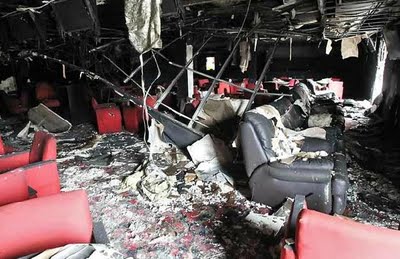
After Monterrey saw piles of severed heads and corpses hanging from overpasses, it was hard to imagine a more gruesome attack in Mexico's industrial heartland. But the survivors pulled out of the city's burning Casino Royale described the truly hellish dimensions of the worst act of violence in the city in recent memory. The massacre illustrates how Mexico's drug cartels have steadily raised the stakes in trying to outbid one another as the most brutal player in the conflict. While their victims used to be limited to gangsters and police, now they are increasingly civilians, with catastrophic consequences.

CTV footage shows a gang of eight gunmen descending on the casino, located in an upper-middle-class neighborhood, on Thursday afternoon, Aug. 25, while about 150 croupiers and customers — mostly women — played bingo, roulette and slots. The scene quickly descended into psychosis and panic, as the crowd stampeded from the games into bathrooms, stairwells and a blocked emergency exit. They heard gunfire and explosions that they thought were grenades and saw men pour gasoline over the machines and set them alight. As the building burst into flames, most of the victims choked to death in trapped corners, while others burned as they tried to escape or were crushed by the stampede. When emergency crews finally smashed down the walls to rescue the survivors, corpses littered the game tables, stairwells and bathrooms. By Friday morning, police had counted 52 dead; dozens more were in hospitals.


Seven men accused of killing a Kelowna father earlier this summer learned Thursday that they’ll be back for their next court-date in four weeks.


Appearing via videolink from Kamloops Regional Correctional Centre were full-patch Hells Angels Robert Thomas and Norman Cocks. Standing at Norman’s side in prison garb, was his father, Throttle Lockers president, Robert Cocks.

Of the three who are still behind bars, Thomas has yet to obtain legal counsel, although he told the court he intended to do so within the next month, setting the pace for when particulars—the part of court proceedings that enables the accused to know the case they have to meet—will be read.

Appearing in person to get the update were Matthew Thomas McRae, 19, and Daniel Joseph McRae, 20, who were joined by their mother.

Anson Lloyd Schell and Thomas Vaughan, are also out on bail, but did not appear in court, choosing instead to be represented by their lawyers.

All seven were arrested several weeks after Rutland father Dain Phillips, 51, died from blows incurred during a June 12 altercation at a gravelly lot at the corner of McCurdy and Gibson roads.

The violent incident was not only the first murder in the Central Okanagan this year, it also marked the first time in B.C. history that full-patch Hells Angels have been charged with murder.

Serious retribution’ Expected after B.C. Gangland Slaying

The recent attack that left high-profile gangster Jonathan Bacon dead and a full patch member of the Hell’s Angels injured is highly likely to spark reprisals but not a full-on gang war, says a gang expert.

Bacon, reputed leader of the Red Scorpion gang, survived assassination attempts in the past, but his luck ran out Aug. 14 when he died in a hail of bullets outside an upscale hotel in the lakeside city of Kelowna, B.C.

With 30-year-old Bacon was Hell’s Angel Larry Amero and two women, all of whom were injured. A member of the Independent Soldiers gang, James Riach, fled the scene before police arrived.

Masked gunmen opened rapid fire in broad daylight on the five, who were travelling in a luxury SUV. One of the women injured was the niece of a Hells Angels chapter president. She was shot in the neck and remains paralyzed.

Kelowna RCMP is working with the B.C.’s Integrated Gang Task Force to hunt down suspects and head off any counterattacks that may be in the works.

Michael Chettleburgh, Canada’s foremost expert on street gangs, says that given the status of Bacon and Amero, retaliation is a certainty, although he doesn’t expect a renewal of the gang wars that erupted in the Vancouver area in 2009.

“You can’t commit this incident without there being serious retribution,” he says, adding that the gang most likely to seek revenge is the Hell’s Angels biker gang.

“I would sense that the level of affront is going to feel much more acute with the Hell’s Angels than it would with the Red Scorpions. The Red Scorpions have been somewhat diminished over the last couple years, given police suppression, arrests, and 36 murders. The Hell’s Angels has more tentacles, so, I would say it’s likely to come more from the Hell’s Angels and/or one of their puppet clubs, of which there are several.”

Gang Alliances Common

Police haven’t said whether the gunman was targeting Bacon—the eldest of the three notorious Bacon brothers gang members—or others in the Porsche Cayenne. Bacon, Amero, and Riach had formed a loosely aligned criminal alliance dubbed the Wolf Pack.

Chettleburgh says interconnections between different gangs is more common today than in the past, and the Hells Angels, the Mafia, and other organized crime groups continue to form relationships with mid-level and street gangs to do the street-level work, such as drug trafficking, extortion, prostitution, and protection rackets.

“If they can access drugs better, cheaper drugs, if they can protect each other, and if they can take on what they perceive to be an emerging threat by joining forces in some kind of loose alliance with another group—absolutely, we see that all the time across the country.”

The heyday of the 70s and 80s when there was a brotherhood among Hell’s Angels and limited cooperation with other gangs is long gone, he says. “It’s now the brotherhood of the wallet.”

Police have said a shooting in Surrey on Aug. 15 has no apparent link to the Bacon hit. In that incident, a lone attacker shot at least eight times at a 32-year-old man as he was getting into a car. The man escaped with minor injuries from shattered glass.

Steve Dooley, a criminology instructor at Kwantlen University and a co-investigator with Acting Together, a project designed to prevent youth from joining gangs, says people have been fearful since the hit on Bacon.

“We’ve talked to kids and we’ve talked to parents, and there is a sense of fear in the community about what’s been happening,” he says. “There is a fear in the community based on things that are going on, and especially based on the fact that some of these things are happening in broad daylight where there’s a lot of innocent people around.”

That fear may be linked to the deadly gangland shoot-outs that played out in Lower Mainland streets over several months in 2009.

In all, more than 40 people were killed, mostly members of the Red Scorpions and the United Nations gang who were engaged in a brutal tit-for-tat turf war in the lucrative trade of imported cocaine and locally grown “B.C. Bud” marijuana.

The violence died down after police arrested several senior gang members including UN gang leader Barzan Tilli-Choli.

Infamous Bacon Brothers

Jonathan Bacon’s brother Jamie, who was convicted of weapons charges in 2010, is one of several charged with murder in relation to a shootout in a Surrey apartment in October 2007 in which six men—two of them innocent bystanders—were killed.

Charges of attempted murder against the middle brother, Jarrod, were stayed in 2004. However, he is facing unrelated weapons charges.

In a Vancouver court on Monday, a man linked to the UN gang was charged with conspiracy to kill the Bacon siblings and their Red Scorpion associates between Jan. 1, 2008 and Feb. 17, 2009. Several UN members and associates have been implicated in a plot to murder the brothers.

In 2008, police took the unusual step of warning the general public to avoid hang-outs frequented by the Bacon brothers because of “significant threats” to their safety.

“The drug trade is why you see all this violence,” says Chettleburgh, author of “Young Thugs: Inside the Dangerous World of Canadian Street Gangs.”


“It’s control of a lucrative market that’s worth an estimated $8 to $10 billion-plus in B.C. When you have that much money on the line you have the conditions for crews to fight it out on the street.”

Supt. Tom McCluskie, the head of the Gang Task Force, has said that the tension in the gang world has elevated since the hit on Bacon and that pressure is being maintained on all B.C.’s gangs. However, like Chettleburgh, the police have also said they don’t expect a drug war.


Chicago gang members arrested in major human sex trafficking case

Authorities have busted a major human sex trafficking operation involving Chicago street gangs, officials announced Wednesday.

A total of nine people were arrested, officials said. Four will appear in bond court Wednesday after they were arrested following a long-term undercover investigation into trafficking of children and young women, officials said.

Those who will appear include: Allen Sahura, Jaymes Hart, Travis Creekmore and Jerrell Creekmore, officials said.

Officials said this was the first time any state agency in the U.S. had used court-ordered wire-taps to crack a sex-trafficking case.


Jonathan Bacon, oldest of the three brothers, died after he and five other passengers in a white SUV were gunned down by a masked assailant, outside one of Kelowna’s grandest hotels

That one of the infamous Bacon brothers would end up dead from bullet wounds was always a given in the bloody shootouts among rival B.C. gangs.

The only unknowns were which Bacon, when and what would be the collateral damage.

Those questions were answered Sunday when Jonathan Bacon, oldest of the three brothers, died after he and five other passengers in a white SUV were gunned down by a masked assailant, outside one of Kelowna’s grandest hotels. The gunman fled in a green SUV after the shooting, which occurred in front of dozens of witnesses just before 3 p.m.

Jonathan’s brother Jamie, the youngest and reportedly the toughest and meanest, is in jail awaiting trial on murder charges for his involvement in the killing of six people. Jamie Bacon was convicted of gun charges in 2010.

The middle brother, Jarrod, was charged with attempted murder in 2004, but those charges were stayed and his whereabouts are “unknown” to police.

So toxic are the Bacon brothers, who were alleged leaders of the Red Scorpion gang, that police issued an unusual warning in 2008 to the community at large to avoid any places where the brothers were known to hang out, or risk getting shot at by their rivals.

The other passengers in the vehicle with Jonathan Bacon, who was out on bail for gun and drug charges, included a prominent member of the Hells Angels who was also injured and a member of the Independent Soldiers. All three gangs have been heavily involved in drug and weapon trafficking.

One of the passengers in the SUV that was shot at fled and has not been located. Police wouldn’t confirm whether Bacon was the intended target.

“The fluidity of gangs in this province changes all the time,” said Supt. Pat Fogarty with the Combined Forces Special Enforcement Unit. “They gravitate to new relations, new people.

“The fact there was a biker, an ex-Red Scorpion and an Independent Soldier in a car is not that unusual. They’re all banding together and reconfiguring themselves into new identities.”

Former Vancouver police officer Douglas Spencer, a gang expert, said there will certainly be retaliation for the Kelowna shooting, because 24-hour surveillance on all the gang members is impossible.

“It now comes down to people’s reputation,” Spencer said. “They cannot allow people to push them around like that.

“Once you let one person push you around, they all will, but in what form and when is anybody’s guess. It could be tomorrow, it could be next year.”

Grand Okanagan hotel general manager Daniel Bibby said immediately after the shooting, guests were asked to stay inside the building. Stress counselling has been made available to guests and hotel employees.

“This is an incident we never expected but our employees are well-trained and when a crisis occurs, they know exactly what to do and took care of our guests and kept everyone calm,” Bibby said Monday.

Bibby called the shooting, which occurred on a popular tourist section of the lakeside resort in the Okanagan, an isolated incident.

As early as 2005, local papers had reported that the Hells Angels were welcome at the Grand Okanagan but were not allowed to wear their colours inside or park their motorcycles by the front door.

The violence among the rival gangs reached one of its deadliest peaks in 2007, when the bodies of six people were discovered in a condo unit in Surrey, a Vancouver suburb. The Surrey Six murders included two innocent men who were caught in the mass execution. Chris Mohan, who lived in the unit next door and Ed Schellenberg, a gas fireplace technician, were in the wrong place when alleged members of the Red Scorpion gang took out four members of a rival gang.

One of the alleged Red Scorpions, Dennis Karbovanec, has since pleaded guilty in three of those deaths, and has been sentenced to life. Jamie Bacon, the youngest of the Bacon brothers, is in jail along with four other alleged Red Scorpion associates, awaiting trial for the Surrey Six murders.

Steve Brown, the brother-in-law of Schellenberg, said that the latest shootings show that nothing has changed.

“We were rattled by this and obviously disappointed that violence continues,” he said Monday. “There’s stuff going on in the background but you always know that it’s going to come out again with guns and shootings. It never ends.”

The gangs of B.C.

Hells Angels

The outlaw motorcycle group made a push into Kelowna to establish its operations about six years ago after rumours their rivals, the Bandidos, were also planning to set up a chapter in the province. “We know that many of the members of Hells Angels are actively involved in crime,” said Sgt. Shinder Kirk of the Combined Forces Special Enforcement Unit of B.C. Two full-patch members of the Hells Angels were charged two months ago with second-degree murder for the beating death of a Kelowna man in June.

Red Scorpions

A multi-ethnic group that had its origins in the Fraser Valley when members met originally in youth detention facilities. The Bacon brothers joined the Red Scorpions after initially being members of the United Nations gang. One of the Red Scorpions, Dennis Karbovanec, pleaded guilty last year to three murder charges in the infamous Surrey Six murders. In that incident, four gang members were killed in a rival hit and two innocent victims — Chris Mohan, a neighbour in the condo unit, and Ed Shellenberg, a gas fireplace technician — were also slain.

United Nations Gang

Another multi-ethnic group formed in the mid-2000s in the Vancouver suburbs of the Fraser Valley. The gang consists of drug dealers who first met in high schools around Abbotsford. They established links to Asian organized gangs and peddled guns, drugs and stolen passports. One gang expert says of an original unit of about 50 members, 28 of them are now in jail, drug addicts or dead.

Independent Soldiers

A multi-ethnic gang with many members from the Indo-Canadian community and ties to organized groups from Calgary and Montreal. The gang has feuded with the Hells Angels in the past but more recently the two organizations have begun some joint projects.

MS-13, or Mara Salvatrucha, originated in El Salvador. Members are initiated by "jumping in," a beating that lasts 13 seconds. Then, according to prosecutors, they rise in the ranks by committing acts of violence.

San Francisco's biggest gang trial in years is heading to a federal court jury today after attorneys offered a final round of competing narratives of organized mayhem on the city's streets and unreliable accusations by government-paid informants.

The Mission District unit of the gang known as MS-13 "waged war against rival gang members" and "ended up spilling a lot of blood on the streets of San Francisco," Assistant U.S. Attorney Wilson Leung told the jury last week during seven days of closing arguments, due to end today.

In more than four months of testimony in U.S. District Court, the prosecution sought to portray the seven defendants as principals of a heavily armed organization that controlled its territory through fear and intimidation.

All seven face up to life in prison if convicted of a racketeering conspiracy that includes four 2008 murders.

MS-13, or Mara Salvatrucha, originated in El Salvador. Members are initiated by "jumping in," a beating that lasts 13 seconds. Then, according to prosecutors, they rise in the ranks by committing acts of violence.

Eighteen others indicted in 2008 have pleaded guilty, including two men who were sentenced to 20 years each for the fatal stabbing of 14-year-old Ivan Miranda in the Excelsior district in July 2008, and two others who await trial for a slaying outside the Daly City BART Station in February 2009.

Additional guilty pleas have come from six men who are awaiting sentencing after testifying for the prosecution. Their credibility is a critical issue in the case.

The witnesses provided inside accounts, supported by secretly recorded conversations, of attacks and plots in which they - and, allegedly, the defendants - took part.

Defense lawyers focused on inconsistencies in the witnesses' statements to federal agents and the jury. They said the six men, who were paid and promised reduced sentences in exchange for their cooperation, could not be trusted.

One witness, Jaime Martinez, "described how he was cooperating and would sell out his own brother to save his skin," said Lupe Martinez, lawyer for Angel Guevara, whom prosecutors described as a leader of MS-13's "clique" at 20th and Mission streets.

Mark Rosenbush, lawyer for defendant Moris Flores, said allegations that Flores had taken part in or ordered three separate shootings were based entirely on Jaime Martinez's uncorroborated testimony.

Martinez "is a liar, he is manipulative and deceptive," Rosenbush told the jury.

Prosecutors said the informants' testimony was corroborated by other evidence, including cell phone records tracking the defendants' movements after fatal shootings as well as their own clandestinely taped statements.

"No one is asking you to like the government's witnesses, but fairly and rationally evaluate their evidence," Leung, the prosecutor, told the jury.

The central charge in the case is racketeering, a conspiracy in a criminal enterprise that includes drug dealing, assaults and murders. The murder victims include Ernad Joldic and Philip Ng, described by prosecutors as ordinary people who happened to be wearing a rival gang's color, red, in the wrong neighborhood one day in March 2008.

Another man, Juan Rodriguez, was killed in a revenge slaying in May 2008, and Armando Estrada, a seller of fake documents, was shot in broad daylight in July 2008 for refusing to pay "taxes" to MS-13 in its territory, prosecutors said. They said a witness saw defendant Guillermo Herrera take off his bandanna and laugh after shooting Estrada.

Besides Guevara, Flores and Herrera, the defendants are Marvin Carcamo, Erick Lopez, Jonathan Cruz Ramirez and Walter Cruz-Zavala.

Behind the razor wire-topped fences of Ferguson prison and other Texas penitentiaries are 5,205 inmates branded the baddest of the bad

— dubbed so devious they are locked in one-man cells for 23 hours a day often for decades.
Lock down. Isolation. Administrative segregation.
Spread among 22 prisons, Texas has more inmates in so-called "ad-seg" than most other states in the nation.
They have been deemed by the Texas Department of Criminal Justice to be "confirmed" members of gangs, too organized, predatory and violent to mix with the 150,000 prisoners in general populations.
They serve their time in cages of about 9 feet by 7 feet with cement walls outfitted with solid steel doors or bars covered with mesh.
"We ain't the most likeable or most welcomed group in society," concedes 38-year-old Anastacio Garcia, a robber from the Rio Grande Valley who has been in isolation here for 15 years. "We sit here day in and day out, basically rotting ourselves away."
Another 4,000 or so inmates are serving temporary stints in ad-seg as punishment for breaking rules or being escape risks.
Their cells are identical to those on death row.
The American Civil Liberties Union and others contend ad-seg imprisonment is cruel and makes inmates meaner and more dysfunctional by the time they are freed.
Straight into isolation
Citing its ineffectiveness as well as cost concerns, Mississippi and Maine have scaled back its use. In California, thousands of inmates recently launched a hunger strike in protest.
A Texas lawmaker unsuccessfully sought this year to require the prison system to review the standards for putting an inmate in ad-seg - and determine whether they are more likely than others to end up back behind bars.
"We are talking about human beings in an isolated place for years at a time," said Rep. Marisa Marquez, a Houston native representing El Paso. "What does that do to them psychologically, and how does that help their rehabilitation when they are supposed to get out and function in society and be productive members?"
In Texas, members of eight prison gangs, categorized as Security Threat Groups, automatically go straight into isolation regardless of the crime they committed.
Those include "confirmed" members of the Texas Syndicate, Mexican Mafia, Aryan Brotherhood and others. Their only way out: renounce gang affiliations, which they rarely do out of loyalty or fear of retribution.
"When I first walked down that run, I seen it was dark and said, 'What the hell did I put myself into?' " said inmate Mike Mendoza, serving life for a Baytown murder. "All I did was walk forward. My heart was beating fast. I said, 'This is for real.' "
'Do not have sympathy'
Ad-seg cells are rarely seen by outsiders, but inmates have access to ministers, counselors and medical and mental health specialists.
Guards sometimes carry shields to protect themselves from being stabbed with homemade spears or pelted with excrement, urine or rotten food - rancid homemade cocktails used for attacks known as "chunking."
"Do not have sympathy for these men," said a retired TDCJ guard who spoke on the condition of anonymity. The former guard noted they are served three meals a day, have medical care and better lives than law-abiding people who end up living under bridges.
The worse, the better, says Aaron McCartney, whose father, a longshoreman, was murdered in Liberty in 2006 by gangsters ordered by their captain to steal a 14-year-old pick-up truck for spare parts.
"Cut their heads off. They don't deserve to live," McCartney said of his father's killers, who are in ad-seg. "They can think about what they did. That is where they deserve to be."
Zeke Young, head of Houston-based, Less than the Least Prison Ministry, which reaches out to inmates in isolation, is one of the few outsiders allowed into ad-seg.
"It is locked down. It is hot," he said, guessing at 115 degrees this time of year, without a cross breeze.
His radio show, also on the Web, is aimed at them. He visits cells, carries a Bible, a stool, and repeats this mantra: The only way out is up.
"I talk to the ones who will talk to me, I do my best to listen," he said. "It is horrible to see the consequences of gang membership. What a man does is give his life away, he stays locked away."
When inmates are taken out of their cells and walked to showers or recreation (a one-man cage), they are handcuffed behind their backs, escorted by two guards and searched extensively.
Still, inmate David Puckett, 27, escaped in March from ad-seg at a Beaumont prison by cutting through the top of a recreation cage.
'Among the living dead'
Puckett, who was in isolation for being an escape risk, scaled razor-wire fences and was later spotted at St. Lukes Hospital in Houston before being caught by deputy U.S. marshals in Nebraska.
Inmates contend the stringent lockup doesn't prepare them for freedom.
"I live among the living dead," said inmate Danny Corral, 32, who was convicted of murder, and sentenced at 16. "This cell is not very different from a mausoleum."
For their part, Texas prison officials contend ad-seg keeps the most dangerous inmates under control.
If placed in the general population, they will be asked by their gangs to follow orders and even kill.
Threats to families
Jason Clark, a TDCJ spokesman, said gangs, for example, have threatened to harm guards' families if they don't let drugs or other contraband into the prison.
Members have also been known to assault and target staff that "infringe" on the group or are perceived as having issues of "disrespect," Clark said.
Virgil Barfield, 55, who grew up in Houston's Heights neighborhood, spent 25 years in ad-seg.
"What carried me through at first was anger, sit back there and be angry," he said in an interview. He is now in general population after renouncing his gang.
"Sooner or later, you are going to have to deal with yourself," said Barfield, who went to prison for burglary, but murdered another inmate in a gang hit. "You have to look at what you've done in life, where you are going."
The ACLU contends ad-seg is arbitrary and ineffective.
"This type of isolation is pervasive around the country," said Amy Fettig, ACLU's senior counsel for the national prison project. "It is now being used at an unprecedented level.
"Unfortunately, when you place somebody in (ad-seg) you are not teaching them how to be a better person. You are simply driving them crazy."

Philadelphia man whom police once described as a hit man for drug dealers

Philadelphia man whom police once described as a hit man for drug dealers, and who is already serving two life sentences, went on trial Tuesday, charged with murder in two more killings.

Malik Collins, 24, and Anthony Collins, 28, are charged with shooting two people in a parked pickup truck the night of March 18, 2006. The killings in the North Philadelphia neighborhood of Brewerytown were the result of a turf dispute between drug dealers, Assistant District Attorney Brian Zarallo said.

The Collinses were connected with a local drug gang and killed Johnny Harmon, 39, because he was selling drugs on the gang's turf, Zarallo said. A neighborhood resident, Latoya Bostick, 18, was an innocent victim, Zarallo said.


"Her only crime was that she thought Johnny Harmon was cute," Zarallo told jurors in the Court of Common Pleas.

More than a dozen shots were fired into the cab of the truck about 11 p.m., said Zarallo, and each victim was hit five times. They were pronounced dead within the hour.

Defense attorneys Samuel C. Stretton, for Anthony Collins, and Michael E. Wallace, for Malik Collins, cautioned jurors that the defendants had to be presumed innocent. The two chief witnesses against the Collinses have criminal records, and one cut a deal with federal prosecutors in return for helping in the city case, Zarallo acknowledged.

Malik Collins was convicted of the two earlier murders in 2008, according to court records.

He was arrested in 2006 after 15th District police officers Kirk Dodd and Williams Smith had a robbery victim call a cellphone stolen by two men.

A man answered, and the victim said he would pay $100 for return of the phone.

When two men appeared to collect the cash, police were waiting.

One of those arrested was Malik Collins, who was carrying a 9mm pistol.

Malik Collins grew up around the 3000 block of Thompson Street in Brewerytown and was convicted of murder in two 2005 killings.

The trial is expected to last about a week. The Collinses face life sentences if they are found guilty of murder in the 2006 killings.

Police chief calls death at Edmonton Institution a homicide

21-year-old inmate died Tuesday night after a fight with another inmate at the maximum-security Edmonton Institution.

Homicide detectives are investigating the 21-year-old’s death as suspicious, but Police Chief Rod Knecht called it the city’s 34th homicide Wednesday morning in an interview with Global News.

Two inmates with a history of gang affiliations began fighting at around 7 p.m. in the prison’s G-unit, a cellblock used to house more troublesome inmates, Edmonton Institution spokesman Rick Dyhm said.

Correctional officers noticed the fight, used a loudspeaker to tell inmates to stop, then fired tear gas into the area. The inmates stopped fighting, and officers escorted one inmate back to his cell.

They found the second inmate with stab wounds and performed cardio-pulmonary resuscitation until paramedics arrived. He was later declared dead.

Both individuals have ties to aboriginal gangs in Saskatchewan, Dyhm said. The victim was a member of the Scorpion Brothers, the other man is a member of the Terror Squad. But Dyhm said it’s too early to say the death was motivated by a gang dispute.

“I cannot say unequivocally it’s gang-related,” Dyhm said. “It also could have been a dispute between two inmates. We’ve had a lot of murders over the years, and it’s ‘I don’t like you, you don’t like me.’”

Prisoners were locked in their cells after the death. The prison will remain in the heightened state of security until it is safe to return to normal, Dyhm said. The other inmate involved in the fight has been placed in segregation.

The fight occurred when inmates were free to move around. Dyhm said he assumes a weapon was involved, given what happened, but could not identify what was used. The altercation would have been caught on camera, he said.

The victim had not committed any acts of major concern for prison staff, Dyhm said, and was not sharing a cell with the inmate he fought. He had only been in the facility since July 4.

Whenever an inmate dies, Corrections Canada investigators review the incident. An additional external investigator is also typically hired, Dyhm said.

An autopsy is slated for Wednesday afternoon.

This is the second inmate killing this year at the prison.

In February, Gyozo Victor Barasso, 45, was stabbed several times inside one of the prison’s units in what police say was a gang-related killing. Inmates Joshua Pickunyk, 21, and Brent Harold Boake, 20, are charged with first-degree murder. Three other inmates face charges as accessories after the fact.

Since 2000, there have been two other homicides at the federal prison.

Roland Simard was strangled in his cell on Oct. 24, 2002. Three inmates wearing masks were seen leaving Simard’s cell shortly before his body was found. While guards knew who the masked inmates were, no charges were laid because it was impossible to prove Simard hadn’t been killed earlier by somebody else.

A fatality inquiry into the death highlighted the need for video surveillance at the prison.

The other homicide occurred Jan. 16, 2000, when Jason Kerr killed Joseph Garon in a fight in the prison’s dining room.

Kerr stabbed Garon in the head with a sharpened spoon after Garon attacked him with a makeshift knife. Kerr was acquitted of the killing because he acted in self-defence.

Dyhm said the institution makes every effort to reduce gang-related violence. Prisoners are interviewed during the admission process and separated to various units based on known or suspected gang affiliations. He said the institution monitors each prisoner’s gang status for changes, and has preventive security staff tasked with intercepting prisoner communications, such as phone calls and mail.

“We have constant vigilance in terms of our prison population and what plans they have,” Dyhm said. “We’re a maximum-security penitentiary. We’ve got numerous different gangs, so we work at separating them.“There’s always security concerns and issues at a maximum-security penitentiary.”

Dyhm said the institution currently houses 277 inmates. The facility has a listed capacity of 228 on Correction Canada’s website, but Dyhm said the current maximum capacity is 305.

It was built in 1978 and is slated to expand by 96 beds by 2014.


police watchdog has appealed for witnesses to the fatal shooting of Mark Duggan by officers in Tottenham, north London.


Mr Duggan, 29, was shot by police officers a week ago in Ferry Lane, as officers attempted to make an arrest.

Post-mortem tests found he died from a single bullet wound to the chest.

Officials from the Independent Police Complaints Commission are in Tottenham talking to people to gather more information.

Violence began in Tottenham on Saturday after the fatal shooting by police of Mark Duggan.

The riots then spread to other parts of London and other cities in England.

Further tests
Investigations by the Independent Police Complaints Commission (IPCC) show two shots were fired by a Scotland Yard CO19 firearms officer.

But the police watchdog said there was no evidence Mr Duggan had fired at police.

The IPCC said ballistic tests showed "no evidence that the handgun found at the scene was fired".

Further tests are being conducted on the illegal firearm, which was converted from a blank-firing pistol to one that shoots live rounds, the IPCC said.

A spokeswoman for the Duggan family said one of the options being considered was to request a second post-mortem examination.

Witness boards
In order to try and speak to as many witnesses as possible, IPCC investigators will be stopping and talking to commuters, handing out information leaflets and putting up witness boards and posters.

IPCC Commissioner Rachel Cerfontyne said: "It is one week since Mark Duggan died on Ferry Lane.

"It is a busy road and there is a busy Tube and train station just minutes away.

"I want to appeal directly to anyone who saw or heard anything that may assist us with our investigation - or if you know anyone who has any information and has yet to come forward and speak to us, please urge them to do so."

The inquest into Mr Duggan's death was opened at North London Coroner's Court in High Barnet on 9 August and adjourned until 12 December.

Officials arrest Mexican gang leader tied to 600 murders

The leader of a notorious Mexican drug gang, who confessed to directly carrying out 300 homicides and ordering 600 others, has been arrested in the central state of Mexico.
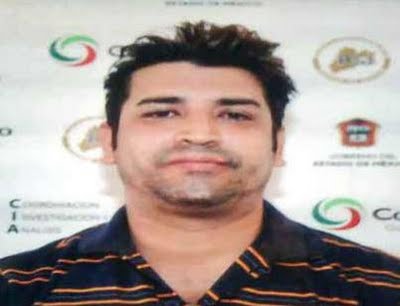
Oscar Osvaldo Garcia Montoya, the leader of the Mexican drug gang, La Mano con Ojos (The Hand with Eyes), was arrested Thursday in the Mexico City borough of Tlalpan by Federal Police.
Montoya, a deserter from Mexico's marines and a former law enforcement officer, had established himself as one of the most intimidating gang leaders in the nation and had cultivated an especially macabre reputation for his gang, which specialized in the torture and decapitation of its victims
A former enforcer and hit man for the infamous Beltran Leyva gang, Montoya used his military training to carry out a multitude of killings. He also served as a bodyguard to many of the group's top bosses before forming his own gang.
Aside from controlling the sales and distribution of illegal drugs in the state of Mexico, his current group is suspected in hundred of murders, including the 2009 massacre of 24 people in the La Marquesa forest outside of Mexico City.
According to Mexican authorities, Montoya confessed to personally carrying out 300 murders and to giving the order for 600 more. He also told police that this weekend's plans involved the decapitation of six gang members who were planning on deserting the group. The murders were to be recorded and sent to members of the media.


Related Posts Plugin for WordPress, Blogger...
powered by Blogger | WordPress by Newwpthemes | Converted by BloggerTheme